The White Mountains have a reputation problem. People hear "4,000-footer" and "above treeline" and assume every trail in the range demands a headlamp and a tolerance for misery. Not so. Some of the best walking in northern New Hampshire runs under five miles round trip, gains less than a thousand feet, and still finishes at a two-hundred-foot waterfall or a ledge with the Presidentials spread out in front of you. The trick is matching the trail to the week you are actually hiking. Snow lingers into May, mud rules the spring, afternoon storms own July and August, and foliage crowds land in October. Here is how to pick a beginner-friendly route that fits the season.
From late March through Memorial Day, anything above roughly 2,500 feet is holding snow, ice, or water — often all three. Boots punch postholes through softening frost, and those ruts can last for years. The guidance from land managers in the Whites is simple: stay low, stay on hard-packed or gravel surfaces, and save the high peaks for later.
Conveniently, the low routes are also the beginner routes.
Wear waterproof boots and pack a spare pair of socks. In April and May, the difference between a good day and a cold one is usually dry feet.
Once the frost works out and the mud firms up — usually late May into June — the waterfalls hit their best flow, and several sit within a mile of a road.
Arethusa Falls, off US 302 in Crawford Notch, is about 1.5 miles each way with 800 to 900 feet of climbing. Steady, never technical, and the payoff is the tallest waterfall in the state. Ripley Falls, a few minutes farther north on the same highway, is shorter — under a mile round trip with one damp, rooty climb. In Pinkham Notch, Glen Ellis Falls is a 0.6-mile round trip off NH 16; the walk is brief, but the staircase down to the viewing area is steep, so take it slowly. Near Lincoln, Sabbaday Falls is a 0.6-mile gravel path with stairs, and the Flume Gorge in Franconia Notch is a two-mile boardwalk loop that charges admission and uses timed entry on busy days.
Two notes for this window. Black flies and mosquitoes peak from late May through June, so repellent and a light long-sleeve layer earn their space in your pack. And rocks that look dry in the parking lot can be running with water a mile in.
By July the high country is open, but thunderstorms build fast and often arrive early in the afternoon. On any route that breaks out of the trees, plan to be back below treeline by midday and turn around if you hear thunder. These three deliver views without the mileage.
From the Crawford Depot area off US 302, the trail climbs 1.6 miles and roughly 900 feet to a ledge looking straight down Crawford Notch. It has the best view-per-effort ratio in the range and makes a fine first mountain for kids or anyone testing their legs.
From Lafayette Place off I-93, switchbacks carry you 1.6 miles and about 1,000 feet to a pond with Franconia Ridge rising behind it. The hut at the far end is a natural lunch stop.
The Artist's Bluff loop runs about 1.5 miles with a short, steep, rock-stepped section and roughly 500 feet of gain. Mount Pemigewasset, also called Indian Head, is a steady 1.7 miles each way with about 1,250 feet of climbing from the Flume parking area. Both get crowded; arriving before 8 a.m. solves the parking problem and most of the trail traffic.
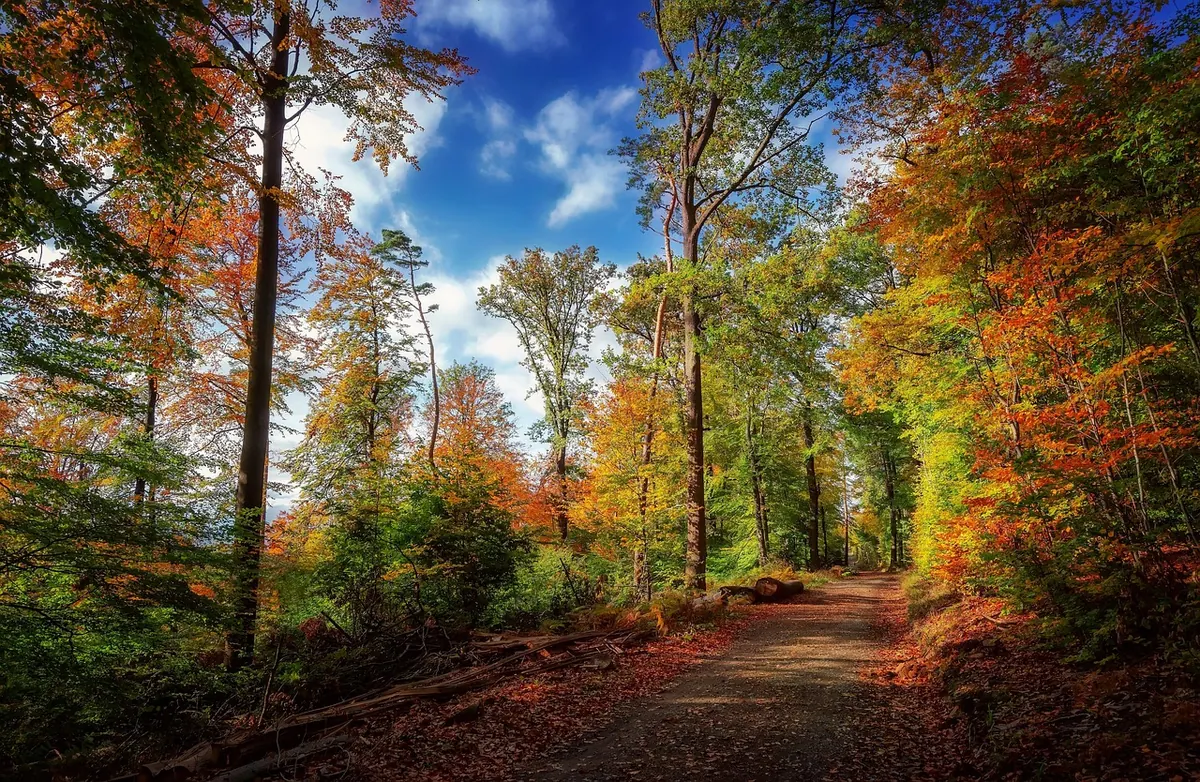
Late September through mid-October, the same routes you hiked all summer become the best seats in the state. Mount Willard and Artist's Bluff overlook valleys that go gold and red, and the Zealand Trail's flat miles run through hardwoods the whole way.
The catch is company. Columbus Day weekend is the busiest stretch of the year, so go midweek or start at first light. Carry an insulating layer — mornings can be in the 30s — and pack traction, because a dusting of snow or a glaze of ice above 3,000 feet is normal by mid-October. Fall also overlaps hunting seasons, which makes a blaze orange hat or vest a sensible habit on any trail where you might leave the main path.
Check the higher summits forecast before you commit. Mountain weather here turns faster than a valley forecast suggests, and a clear morning in Concord says nothing about Crawford Notch at noon. Tell someone which trailhead you are using and when you expect to be back. Some trailheads require a day-use pass and the rules change, so confirm current requirements before you drive.
Finally, be honest about your fitness. A flat mile of rail bed and a mile of switchbacks are different hikes. If you are returning to hiking after time away, or you have heart or lung concerns, talk with a doctor first and start with the gentlest options — Lincoln Woods and the Zealand Trail — before you aim for a ledge.
Photo: Robert_C / Pixabay